
Artist talk and CLOSING event: COLLIDER — Mia Straka & Jess Winchcombe
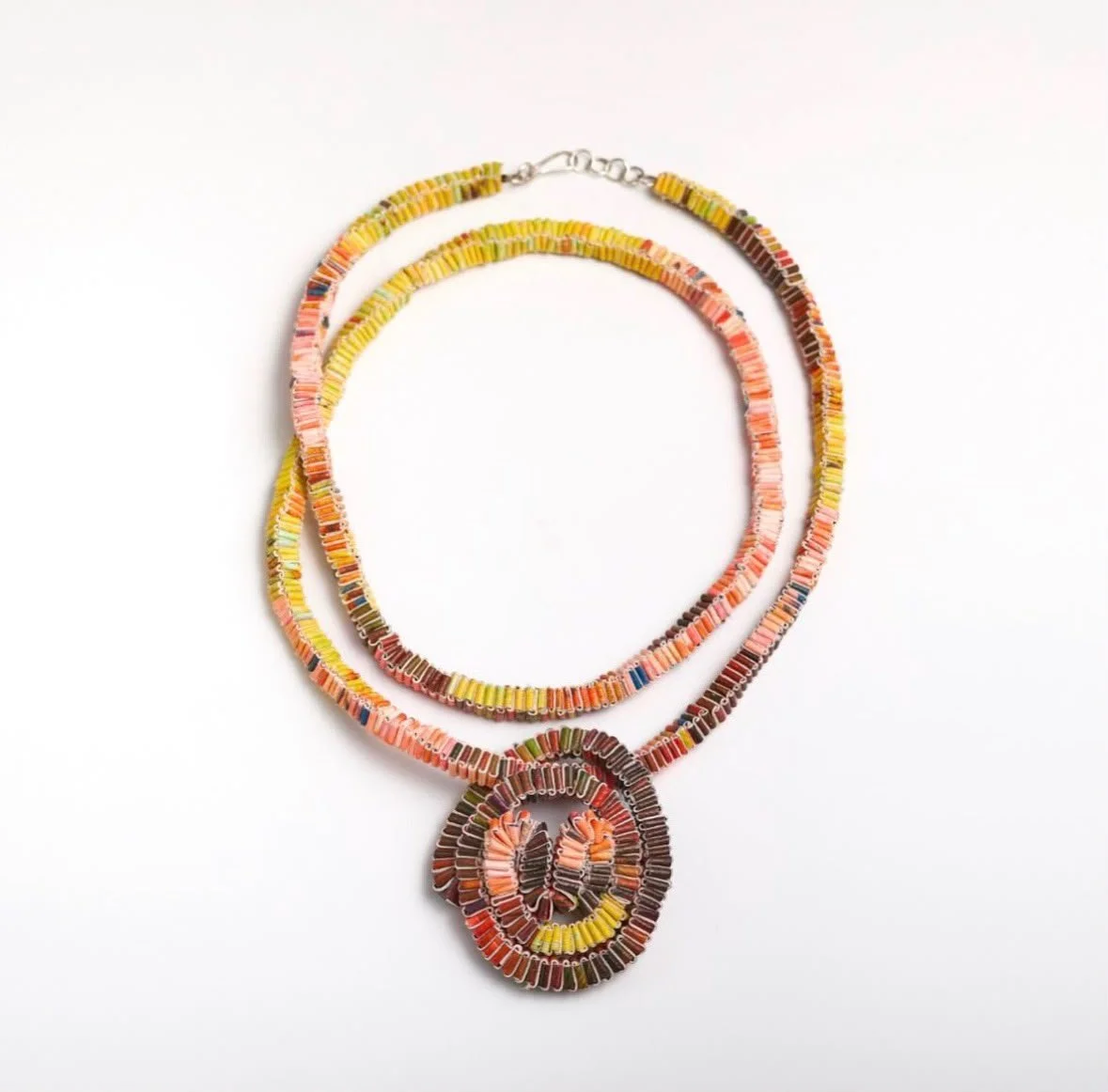
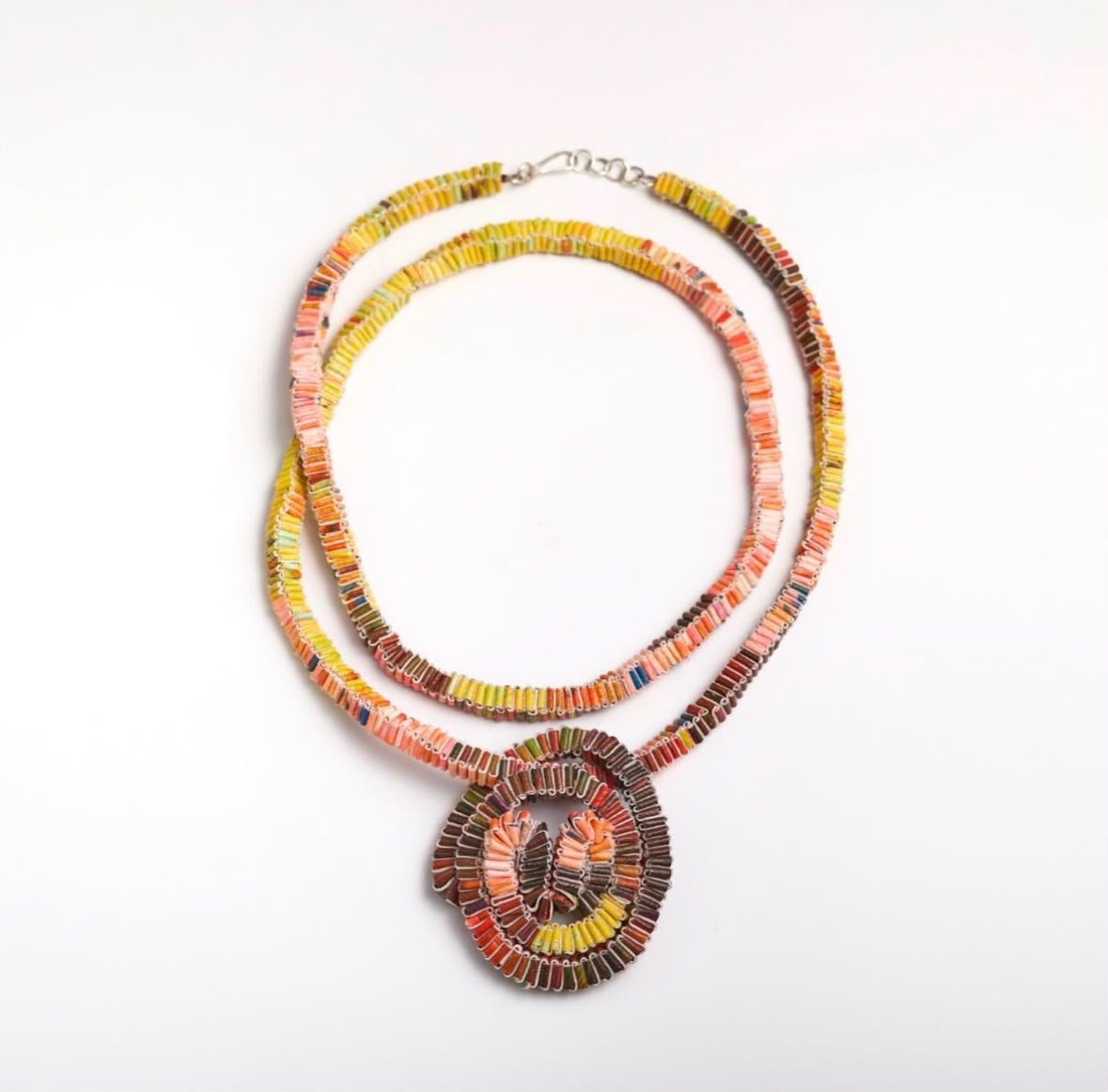
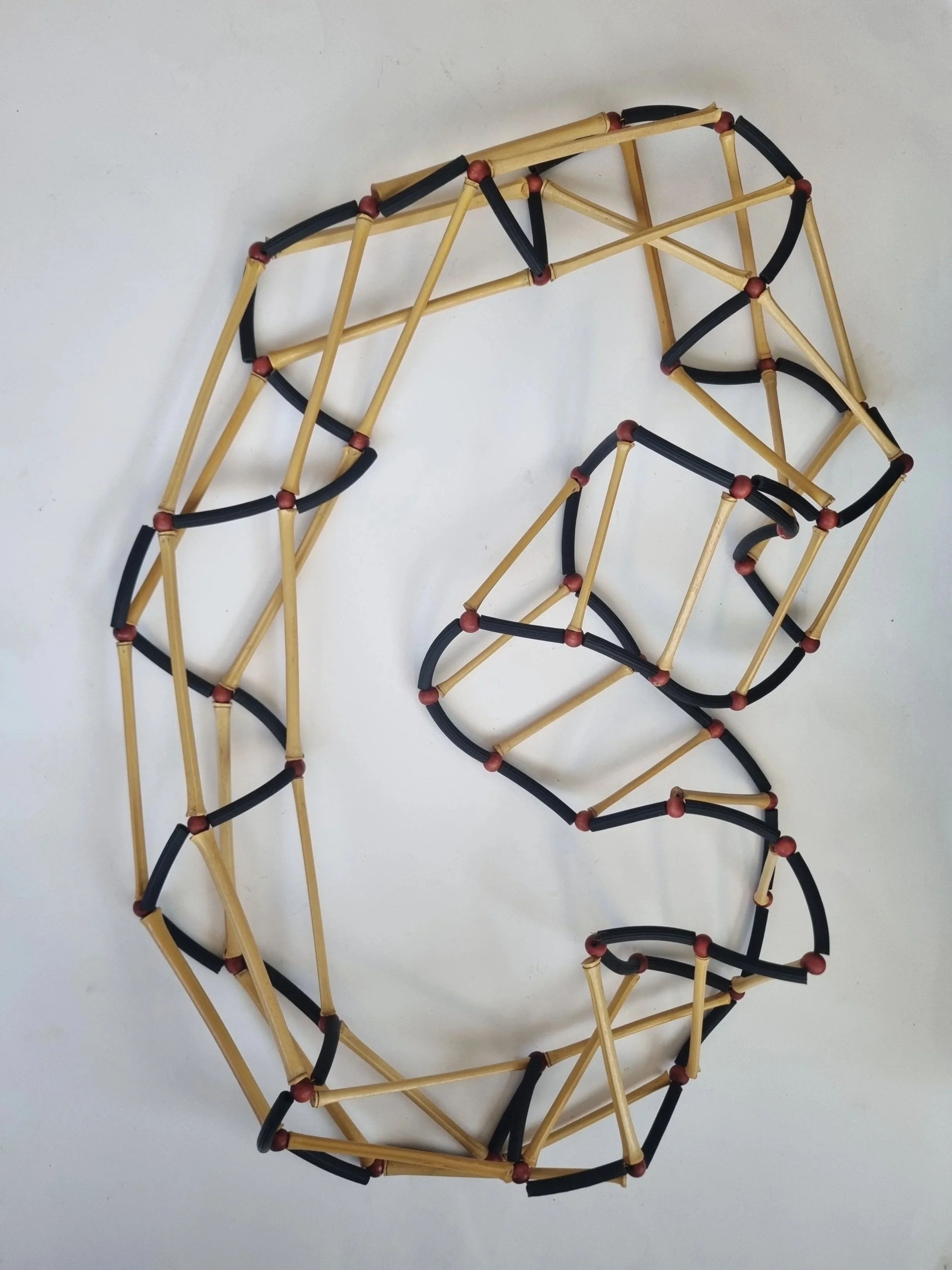
Acid, necklace by Jessica Winchcombe. Image @paulgreen.photographer
Join Mia Straka and Jess Winchcombe as they discuss their month in the gallery and discoveries made.
What happens when jewellery leaves its pedestal, precious objects become playful, and the way we display becomes part of the artwork itself?
During our month-long residency at Project 100, Mia Straka and Jess Winchcombe will use the space as an experimental curatorial playground. We want to create an evolving environment where jewellery, objects, photography, performance and unexpected encounters collide.
In collaboration with Makers 101
Common ground Opening night
Join us for the opening night of Common Ground an exhibition by Jess Nicholson and Sonja Walker.
Common Ground brings together two artists with distinct cultural histories and perspectives, connected through a shared relationship with the earth. While their approaches and understandings of place differ, both artists look to materials from the land as a way of exploring connection, identity, belonging and the relationship between people and place.
In this body of work, Walker explores overlooked spaces and fleeting moments. In her paintings the earth itself becomes part of the work; its tendency to crack, shift and change echoes the transient nature of shadows and the passage of time. Walker’s exploration of earth pigments began during the Covid era, as an act of resourcefulness and self-sufficiency but overtime has become a way of physically and conceptually connecting with place—linking her Scottish birthplace with the land she now calls home. At the heart of her practice is a desire to slow down and pay attention—to overlooked spaces, shifting light, surfaces and the materiality of things. The act of making becomes a quiet, meditative engagement with time.
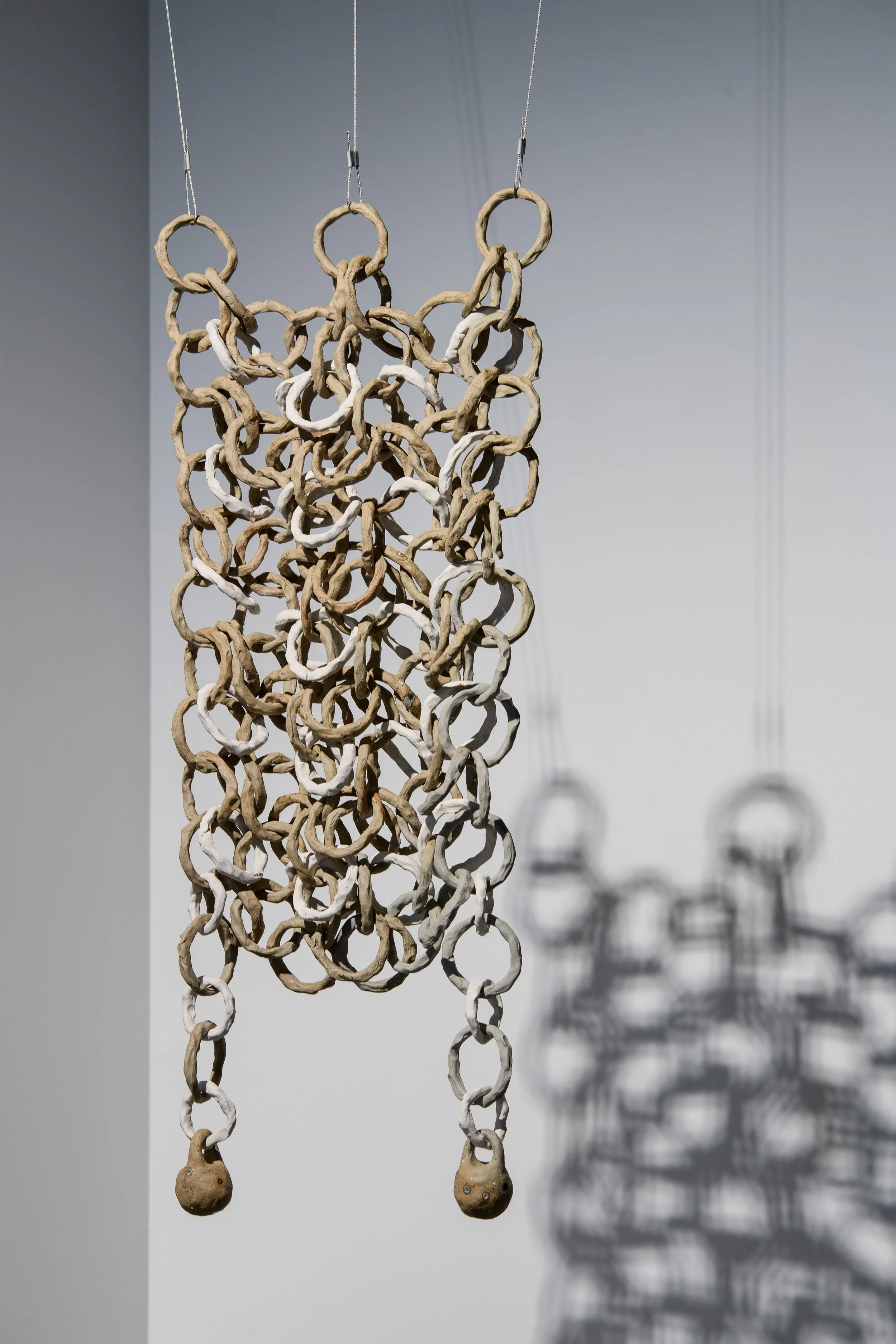
Nicholson (Waitaha, Kāti Māmoe, Kāi Tahu, Pākehā) works with uku (clay) and whenua (earth) from both a te ao māori, and waste minimisation perspective. They consider the earth first as an ancestor, before a material and - seeking to minimise extraction and waste - prioritise using recycled and waste materials before taking from the land. Through their continued exploration of interlinking rī (circles) Nicholson draws on the potential, strength, and fragility of uku to connect with both their mixed whakapapa and question anthropocentric relationships to whenua. Playing with light, weight, and shadow, Nicholson’s intricate chain sculptures reconsider traditional ideas of landscape art, and open up questions around material, place, extraction and belonging. Common Ground does not suggest that these experiences are the same, but creates a space where different cultural histories and relationships to place can sit alongside one another. Through earth, material and making, the two practices meet on common ground.
Mistrey Bags? WORKSHOP
With Mia Straka & Jessica Winchcombe
As part of their residency COLLIDER at Project 100, Nelson.
Saturday 21 November | 10 am–1 pm
$150 per person
Ever wondered what treasures might be hiding on another jeweller’s workbench?
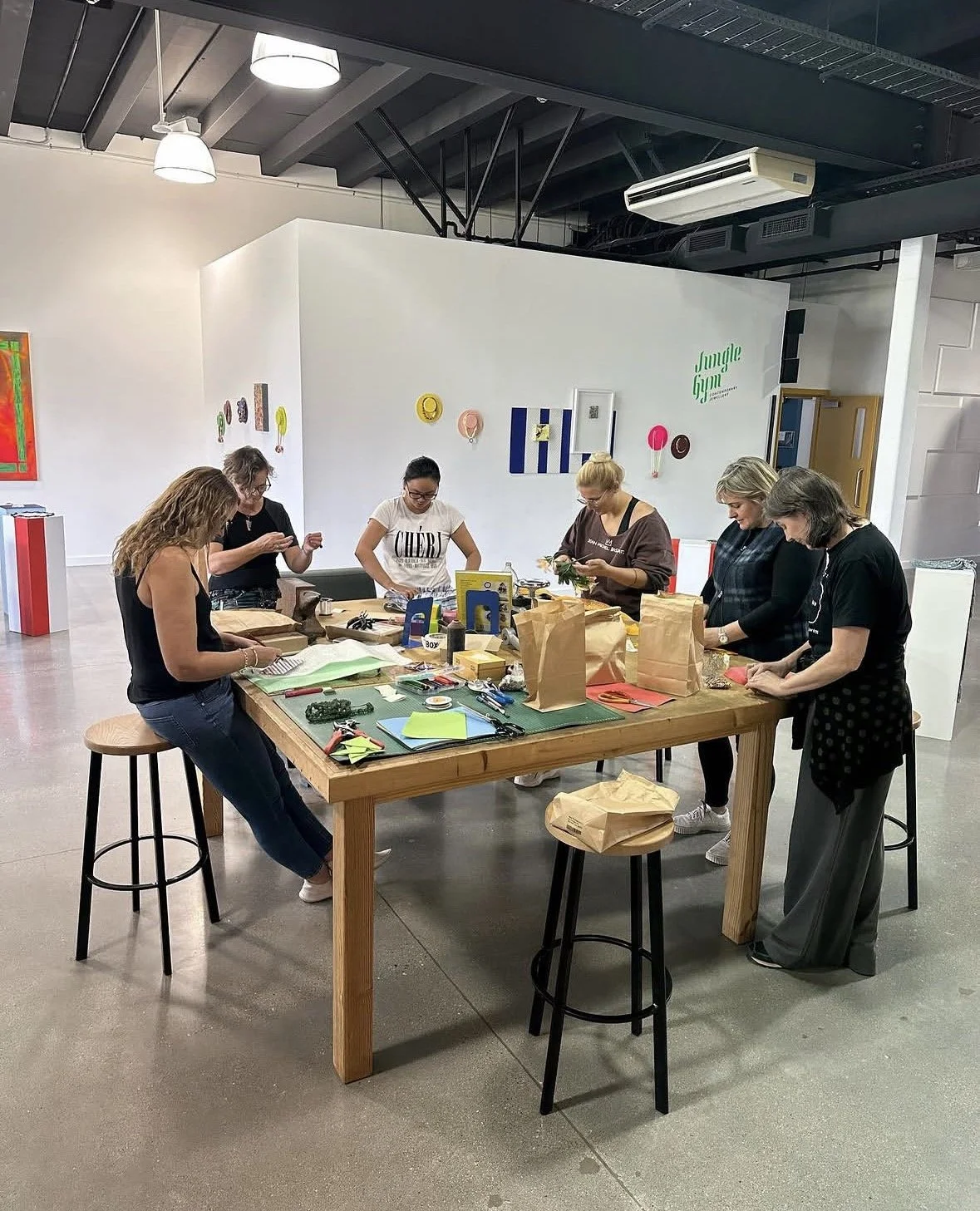
Join Mia Straka and Jessica Winchcombe for a playful, experimental workshop exploring the materials, ideas and creative possibilities found in the studios of New Zealand contemporary jewellers.
Each participant will receive a mystery bag filled with materials gathered from the workbenches of contemporary jewellers across Aotearoa. Over a cuppa, we'll introduce the makers, look at examples of their work and share a little about their individual practices.
Then comes the fun part — opening the bags!
We'll explore, swap ideas, experiment and see where the materials take us, responding to the experimental spirit of COLLIDER. This isn't about creating a finished masterpiece or getting things right. It's about curiosity, taking creative risks, getting your hands busy and finding yourself in the flow alongside other creatives.
There will be plenty of conversation, creative play and an opportunity to hear more about Mia and Jess's COLLIDER residency and the ideas unfolding along the way.
Can't make the workshop?
We'll have additional Mystery Bags available to purchase, so you can take one home and enjoy your own creative adventure in your own time. $80
Come curious, bring an open mind and see what mysteries unfold!

HOT CHIPS - NOV

HOT CHIPS is our monthly hang-out, a casual night of drinks, yarns, and hot chippies. It’s an open invite to connect with friends, artists, and the community. HOT CHIPS is B.Y.O. drinks, but we’ll always have the hot chips covered.
This initiative is run in collaboration with the Nelson Arts Council
OPENING: COLLIDER — Mia Straka & Jess Winchcombe
Acid, necklace by Jessica Winchcombe. Image @paulgreen.photographer
Join us for an evening of jewellery and connection to celebrate the opening of COLLIDER by Mia Straka and Jess Winchcombe.
What happens when jewellery leaves its pedestal, precious objects become playful, and the way we display becomes part of the artwork itself?
During our month-long residency at Project 100, Mia Straka and Jess Winchcombe will use the space as an experimental curatorial playground. We want to create an evolving environment where jewellery, objects, photography, performance and unexpected encounters collide.
In collaboration with Makers 101
Coffee and kōrero
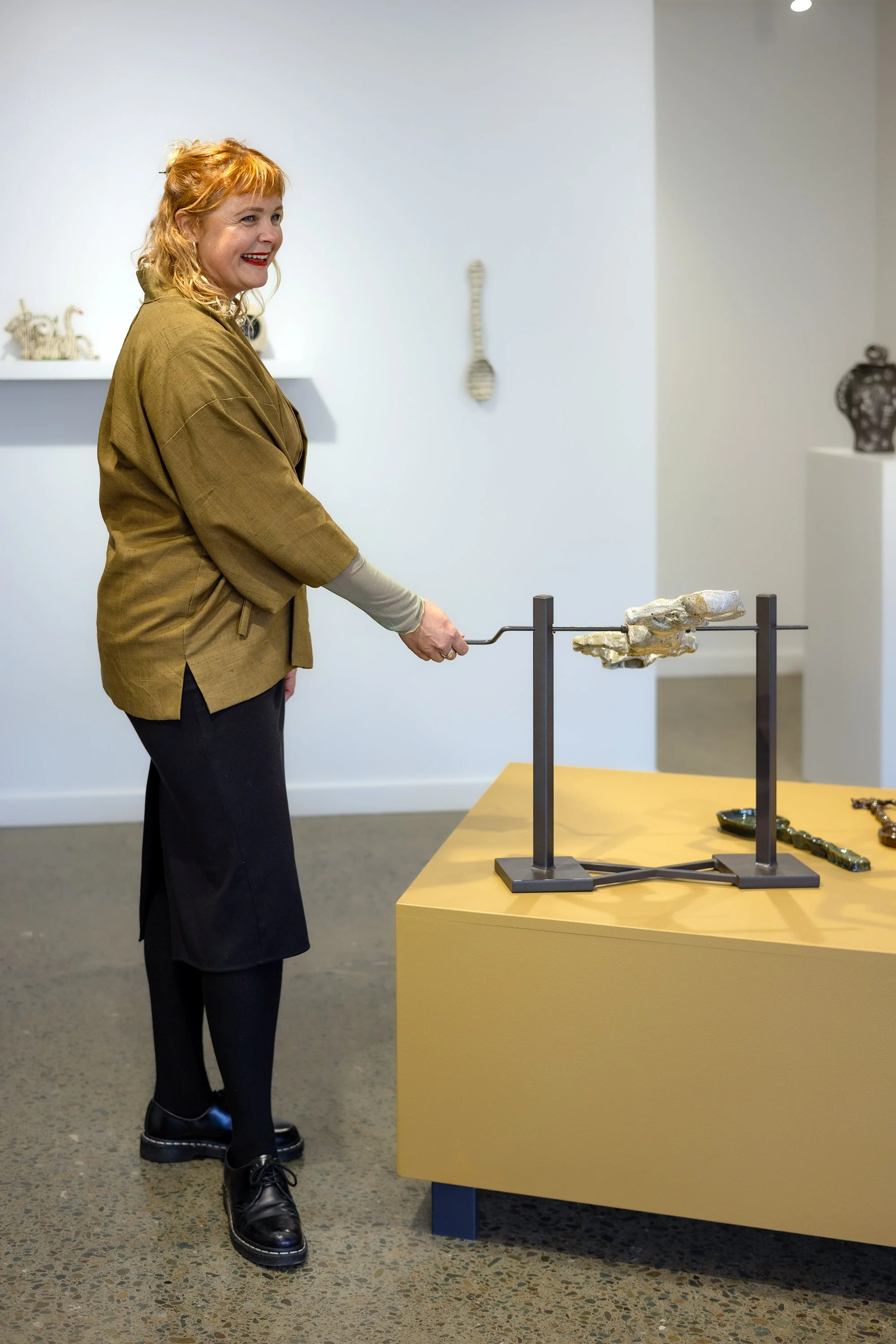
Join ceramic artist and curator Holly Rose Morgan as she discusses our current show ‘Feeding The Ego’and her ceramic practice.
HOT *WORDS* - HOT CHIPS SEPT EDITION
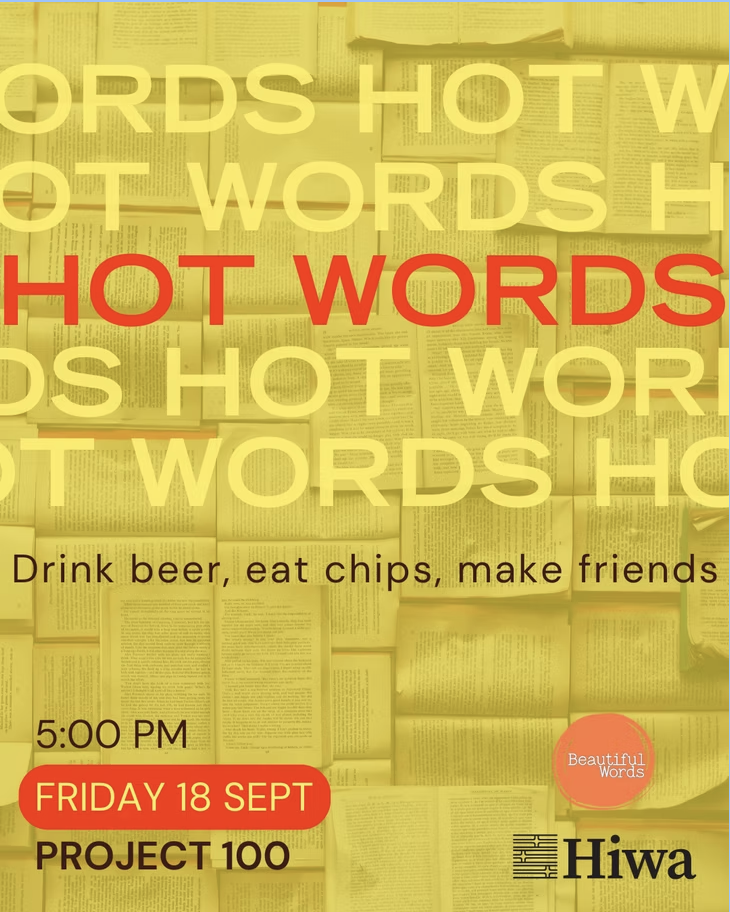
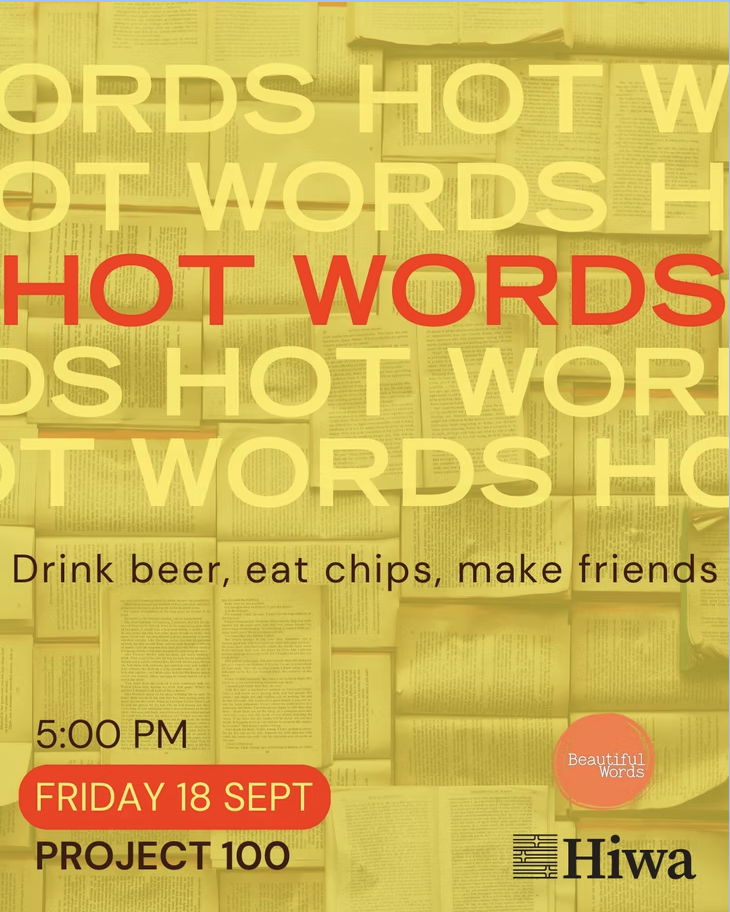
Join us for the first HOT CHIPS back at Project 100. This edition is changing to HOT WORDS in celebration of Beautiful Words which is happening at Project 100 over the month of September.
HOT CHIPS is our monthly hang-out, a casual night of drinks, yarns, and hot chippies. It’s an open invite to connect with friends, artists, and the community. HOT CHIPS is B.Y.O. drinks, but we’ll always have the hot chips covered.
This initiative is run in collaboration with the Nelson Arts Council / HIWA

OPENING NIGHT: BEAUTIFUL WORDS

Come Celebrate the Launch of Beautiful Words at Project 100 in Nelson!
Enjoy catching up with old friends and new, and just have some fun as we launch Beautiful Words, New Zealand's newest independent writing con.
Join George Penney, Tony Johnson & Nina van der Voorn as they celebrate the launch of two brand new books and then admire the word art of numerous talented local artists in the Project 100 Markers' Space.
This is an all ages evening that's all about enjoying how vibrant the creative community is here in Nelson Tasman.
No bookings needed. Just bring yourself and a friend.
For all other Beautiful Words events, go to www.beautifulwords.net
BEAUTIFUL WORDS
A Celebration of Independent, Alternative & Underground Writing
ABOUT
Beautiful Words is a forty-day writing con, held from September to October 2026, that celebrates all things independent, alternative and underground writing.
The first 27 days will be held in the beautiful Project 100 Makers’ Space in sunny Whakatū Nelson, with a further ten days held online, accessible for anyone around the world.
Our aim is to provide a safe, fun space for knowledge-sharing and networking for writers of all skill levels, be they authors, poets, songwriters, game writers, playwrights or writers for film and TV.
Workshops, talks and events are designed to be entertaining, practical and affordable, with most operating on a koha (pay what you can) basis.
Our philosophy is that we’re all in this together, so why not make each other’s lives a little bit more wonderful.
Opening night:
5.30pm, 03 September 2026
Project 100, 100 Collingwood Street, Nelson

KO AU TE WHENUA KO TE WHENUA KO AU - Te Ataarangi ki Te Tauihu & Te Ohu Weka
Project 100 is delighted to hand the gallery over to Te Ataarangi ki Te Tauihu and local artist collective Te Ohu Weka for their exhibition, KO AU TE WHENUA KO TE WHENUA KO AU.
Running throughout June, this pop-up exhibition brings together a collection of artworks celebrating Papatūānuku and the maramataka. Alongside original artworks, the collective will also be selling their highly anticipated maramataka calendars, with all proceeds going towards Te Ataarangi’s grassroots reo revitalisation programmes across Te Tauihu/ the Top of the South.
Find out more here:

Artist Interview: Keri-Mei Zagrobelna
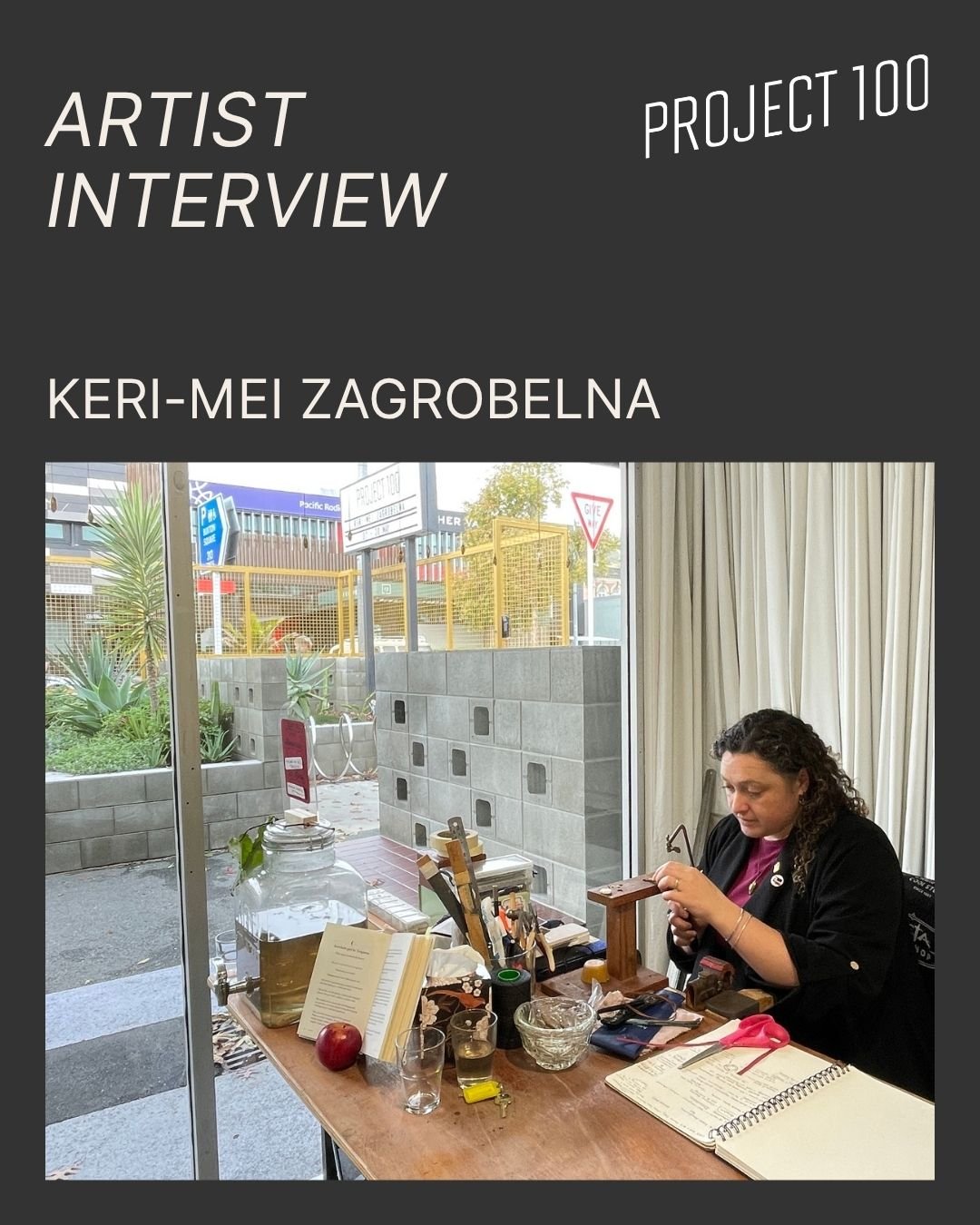
Artist Interview: Keri-Mei Zagrobelna.
Q. How did you first come to jewellery and creative practice? Was making always something you felt drawn toward, or did it emerge more gradually over time?
I’ve been drawn to creativity and art for as long as I can remember. It was something that surrounded me growing up — being immersed in environments filled with artefacts, objects, and art made it feel like a natural path to follow.
Over time, making became more than just an interest; it became a form of rongoā. It allows me to express myself while also processing ideas, emotions, and both present and past experiences. Jewellery is my primary medium — I often think of it as a kind of silent ambassador. It’s always been there for me, teaching me, holding meaning, and creating a way to connect with others without needing words.
Through jewellery, I’ve found a language that not only supports my own wellbeing but can also extend outward — offering connection, reflection, and at times, healing for others.
While I identify as a contemporary Māori jeweller, my practice continues to expand. I work across drawing and sketching, and I’m increasingly moving into installation and larger-scale works. I’m really interested in how my practice can keep evolving — both in form and in the way it holds and communicates meaning.
Q. Can you talk us through the title of the exhibition, what sparked this body of work, and how ideas of rongoā, Maramataka, and the rhythms of whenua have shaped both the work and your understanding of wellbeing?
He Ngaki Māra translates to “to turn the soil,” and the title emerged through a conversation with a close friend as I was trying to articulate the kaupapa of the exhibition. It felt like a fitting metaphor for what this body of work is doing - a process of digging, tending, and preparing ground for growth.
Set during Ngahuru, the season of harvest, the exhibition reflects a time of gathering and reflection, but also one of transition. It holds space not only for what has come to fruition, but also for what needs to be cleared, composted, or reworked. This cyclical understanding is central to the work.
At the heart of the exhibition is the idea of mahi toi as a form of rongoā. I often think about the tinana (body) and hinengaro (mind) as a kind of māra. Within that, there are constant questions: what are we planting, what are we nurturing, what are we harvesting, and what needs to be let go? The act of making becomes a way of working through these states — a tool for processing, reflection, and care.
The Maramataka and the rhythms of whenua have been key in shaping both my making process and my thinking. They offer a framework for understanding balance — recognising when to act, when to pause, and when to restore. This has shifted the way I approach not only my practice, but also my everyday wellbeing.
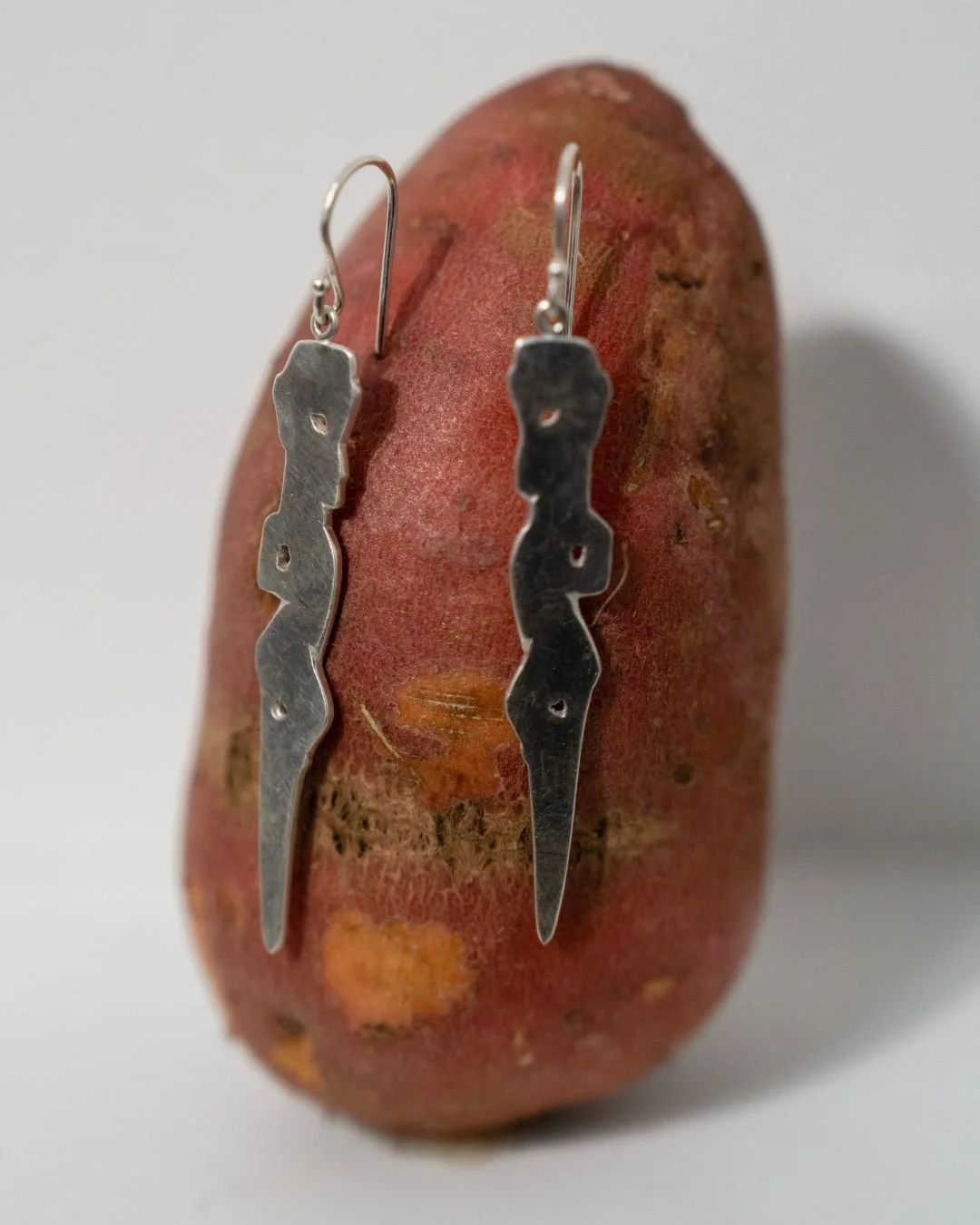
For me, the relationship between creativity, healing, and care is deeply intertwined. Mahi toi becomes a space where those things can exist simultaneously — where making is not just about producing objects, but about tending to self, to memory, and to connection. It’s an ongoing process of learning how to be in a better relationship with ourselves and the world around us.
Q. Growing up immersed in museum environments and taonga, how did those early experiences shape your relationship to making and storytelling? And what drew you toward engaging with Rongomātāne within this body of work?
Growing up within museum environments, surrounded by taonga, instilled in me an early understanding of objects as carriers of memory, whakapapa, and narrative. Those spaces became sites of connection - not only to my tūpuna, but also to ways of seeing and expressing that continue to inform my practice. Within te ao Māori, we are inherently a visual and embodied culture; our stories are held and transmitted through forms such as kapa haka, whakairo, and raranga. In this sense, making has always felt like a natural extension of storytelling — a way of giving form to lived experience and inherited knowledge.
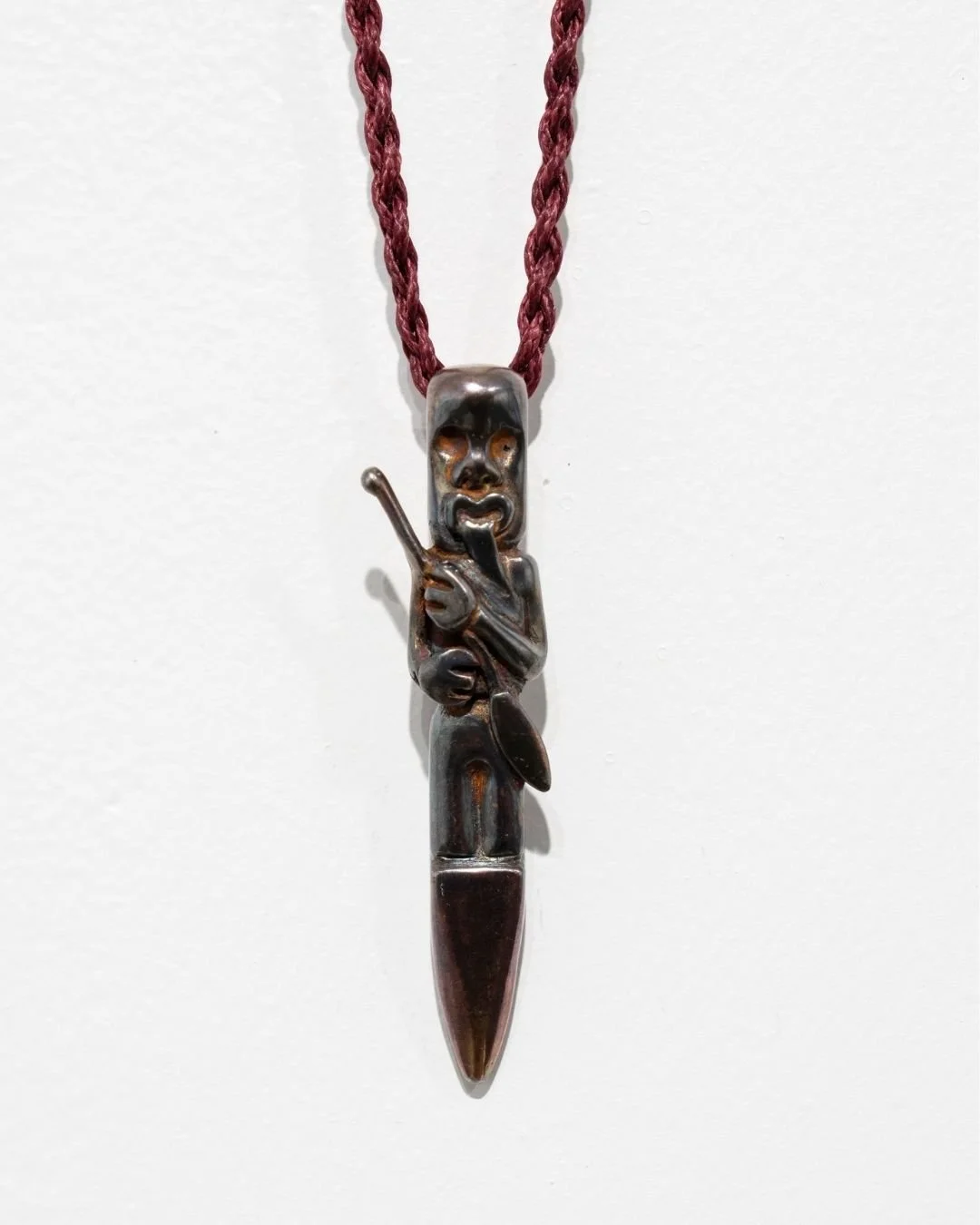
This relationship deepened during a visit to the Nelson Provincial Museum’s Richmond research facility, where I spent time with taonga from the collection. That encounter became a pivotal moment within my practice. Among the works was a taumata atua that I felt a strong connection to — a form believed to represent Rongomātāne, and thought to have travelled from Taranaki through the migrations of Te Āti Awa into the Whakatū region.
Through this meeting, my engagement with Rongomātāne began to unfold more intentionally. I became drawn not only to the atua himself, but to the mātauranga and kōrero he holds — as atua of cultivated foods, of peace, and of considered, grounded action. There is a quiet strength within his domain, one that speaks to patience, nourishment, and the sustaining of life.
Positioning Rongomātāne as a central pou within He Ngaki Māra feels both intuitive and timely. In a world that can often feel uncertain or unstable, there is a need to return to these frameworks of understanding — to look toward our atua and tūpuna for guidance. His presence offers a reminder to tend carefully, to move with intention, and to remain grounded in cycles of cultivation and care.
In this way, the work becomes not only an exploration of material and form, but a process of listening — to taonga, to whakapapa, and to the knowledge systems that continue to guide us forward.
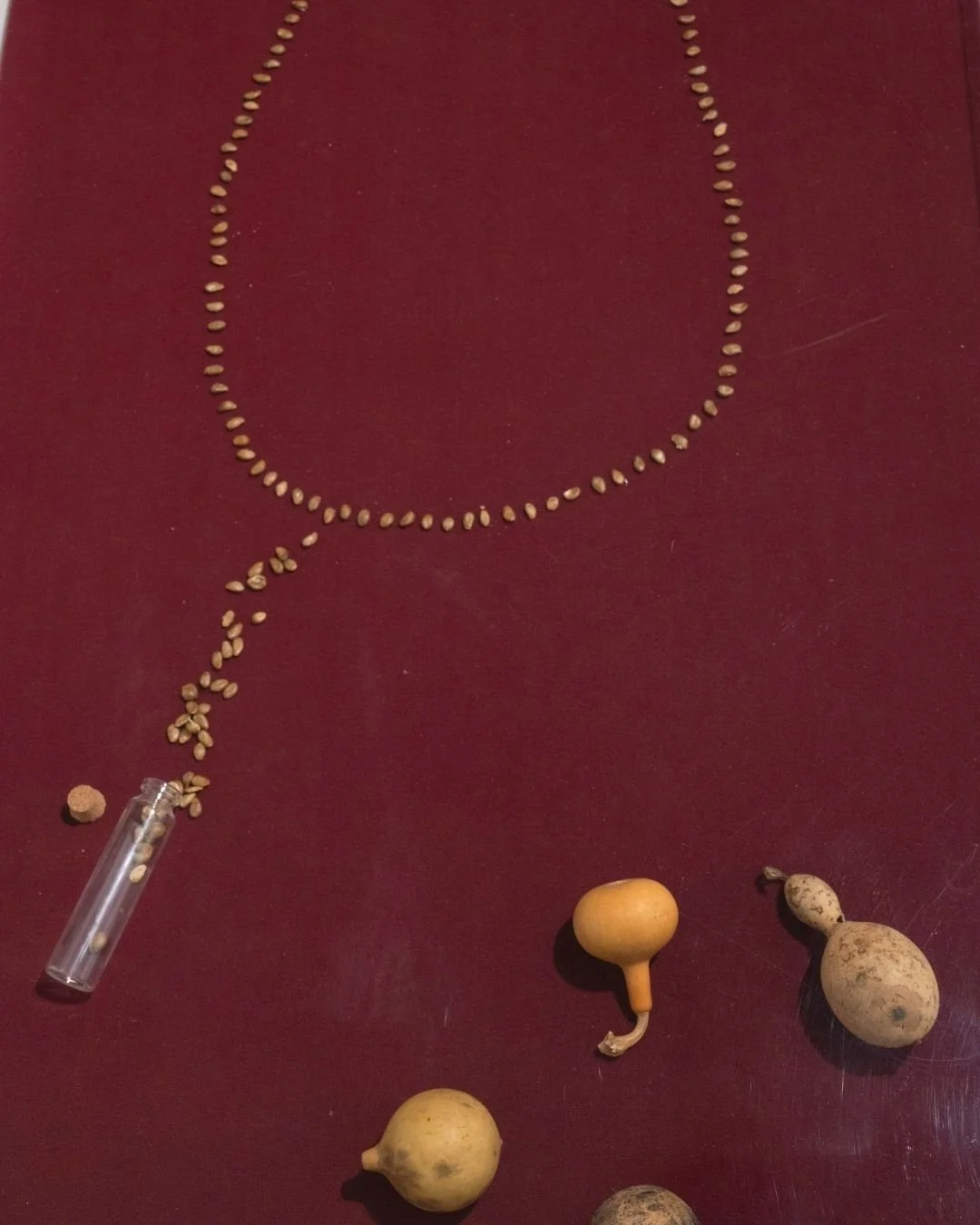
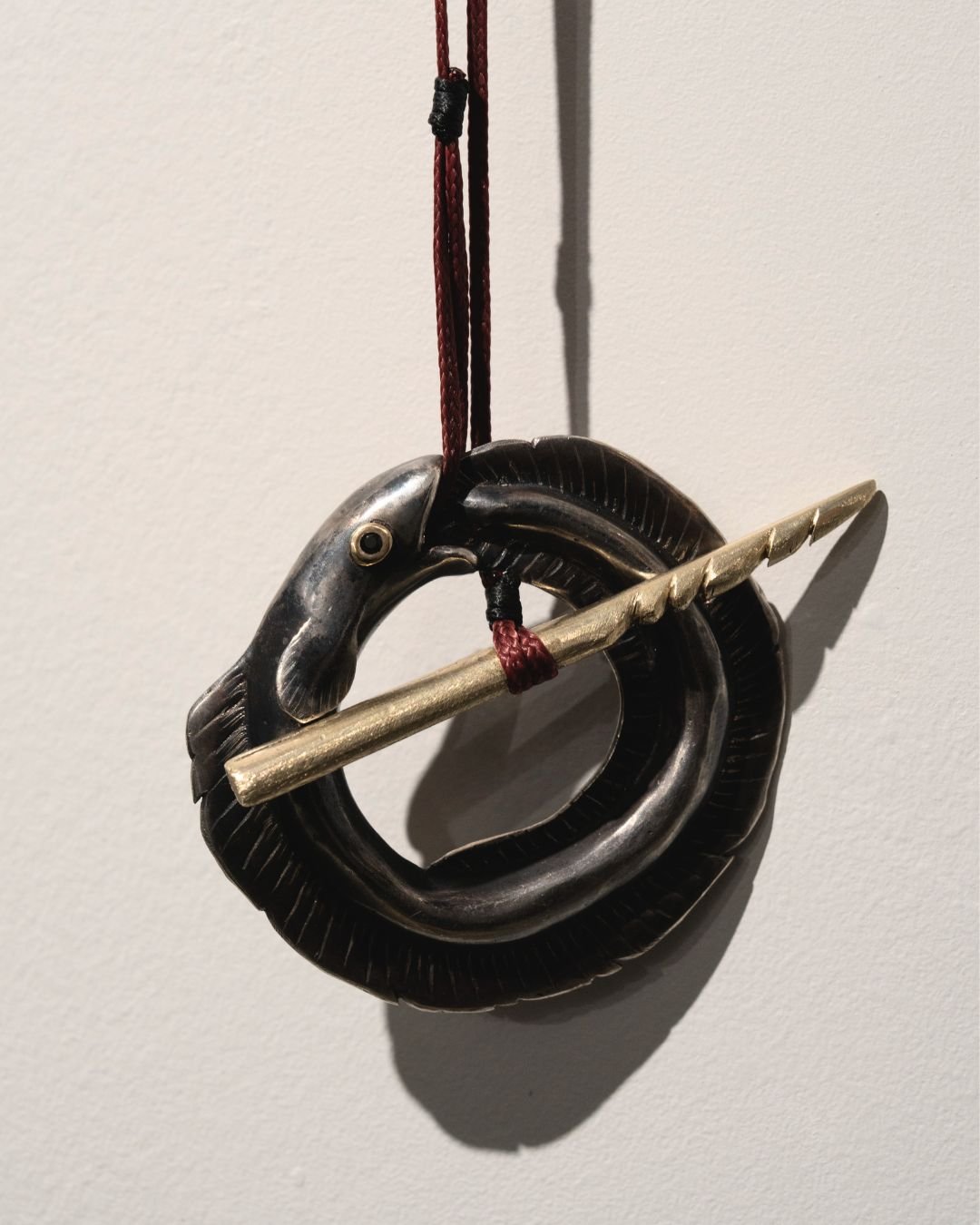
Q. He Ngaki Māra extends beyond the gallery walls through workshops, shared kai, and acts of manaaki. How have you approached bringing whakaaro around rongoā into the gallery space, and transforming it into a site of care, connection, and lived experience?
As this is my first artist residency, I felt a strong sense of responsibility to honour the relationships I hold within this community. That sense of accountability has guided the way I’ve approached the space — not just as a site for exhibition, but as a place to actively practise manaaki.
From a young age, I was taught the importance of how you show up for others — that care, generosity, and hospitality are integral to upholding the mana of your whānau. Those values sit at the core of how I work. Bringing that into the gallery has meant creating multiple entry points for connection — through workshops, shared kai, kōrero, and small gestures of care such as offering healing beverages.
In this way, the gallery begins to shift from a potentially static or formal space into something more relational and alive. It becomes a place where people can gather, exchange, and participate, rather than simply observe.
This approach is deeply connected to my understanding of mahi toi as rongoā. The work is not only held in the objects themselves, but in the interactions that surround them — in the conversations, the making, and the time spent together. These moments of engagement become part of the practice, fostering a sense of whanaungatanga and collective experience.
For me, it’s about reaching people on different levels — creating space for both individual reflection and shared connection. In doing so, the gallery becomes an extension of the kaupapa: a living environment grounded in care, reciprocity, and the ongoing weaving of relationships.
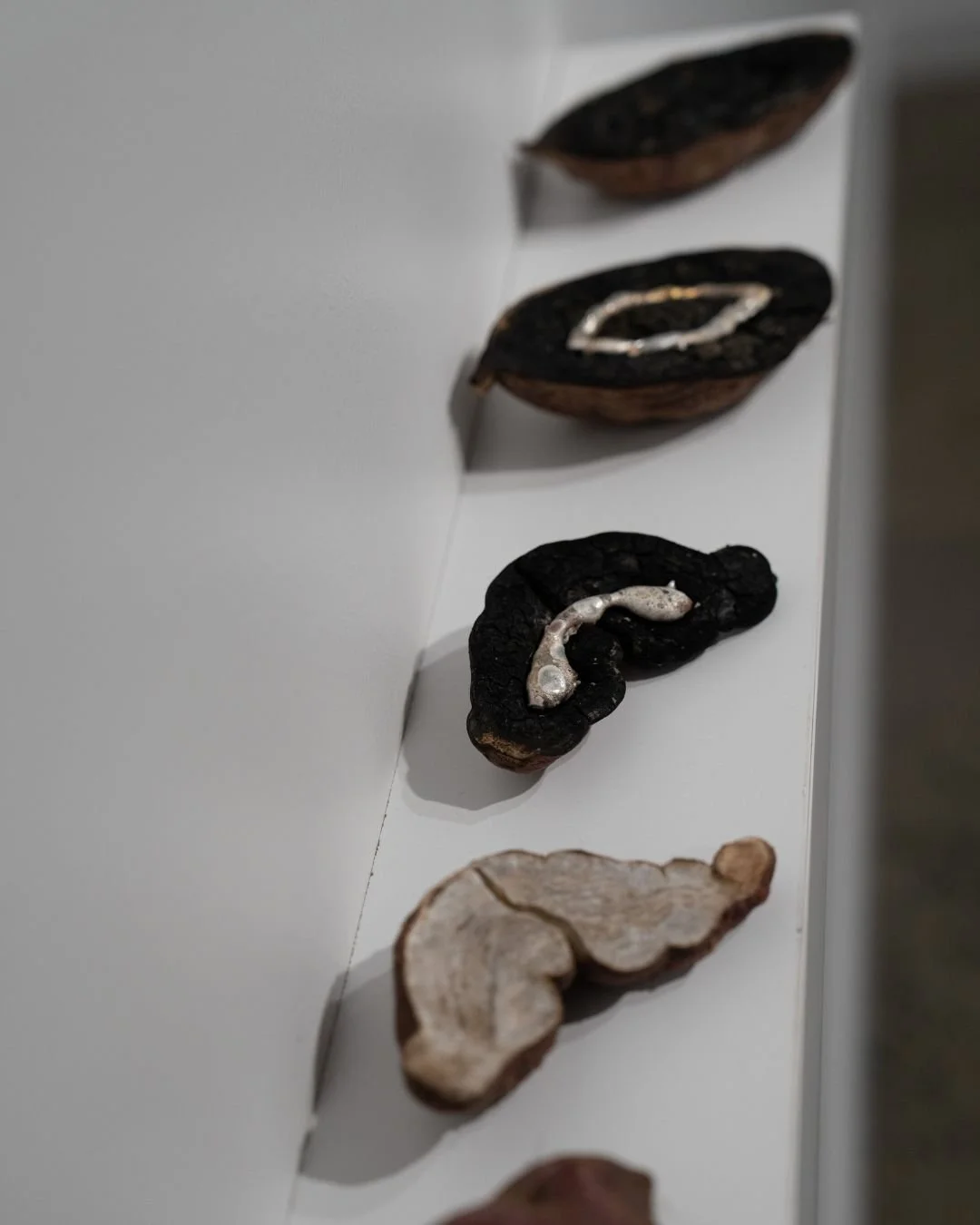

WORKSHOP: Making with the Maramataka (Session 2)
Join artist Keri-Mei for a relaxed, hands-on making session held alongside her exhibition at Project 100, He Ngaki Māra. This workshop invites friends and whānau to come together, share some kai and kōrero, and create their own wearable pieces.
Using materials such as shells, beads, polymer clay, and found elements, participants will make pendants or earrings in a supportive, social environment. This is a beginner-friendly workshop — no prior experience needed.
Grounded in the kaupapa of the Maramataka, this session explores the connection between creativity and wellbeing. Through making, we reflect on rhythm, balance, and the ways mahi toi can support hauora and mental wellbeing in our everyday lives.
All materials are provided, but you’re warmly encouraged to bring along any special or found items you’d like to incorporate into your piece.
You’ll leave with your own handcrafted adornment — something to carry with you, and a gentle way to mark the turning of the season.
Two sessions available on Sat 16 May
Session 1: 10am - 12pm
Session 2: 1pm - 3pm
Book you tickets here


WORKSHOP: Making with the Maramataka
Join artist Keri-Mei for a relaxed, hands-on making session held alongside her exhibition at Project 100, He Ngaki Māra. This workshop invites friends and whānau to come together, share some kai and kōrero, and create their own wearable pieces.
Using materials such as shells, beads, polymer clay, and found elements, participants will make pendants or earrings in a supportive, social environment. This is a beginner-friendly workshop — no prior experience needed.
Grounded in the kaupapa of the Maramataka, this session explores the connection between creativity and wellbeing. Through making, we reflect on rhythm, balance, and the ways mahi toi can support hauora and mental wellbeing in our everyday lives.
All materials are provided, but you’re warmly encouraged to bring along any special or found items you’d like to incorporate into your piece.
You’ll leave with your own handcrafted adornment — something to carry with you, and a gentle way to mark the turning of the season.
Two sessions available on Sat 16 May
Session 1: 10am - 12pm
Session 2: 1pm - 3pm
Book you tickets here
HOT CHIPS - MAY
Join us for the final HOT CHIPS at Project 100 before we move locations for the winter months.
HOT CHIPS is our monthly hang-out, a casual night of drinks, yarns, and hot chippies. It’s an open invite to connect with friends, artists, and the community. HOT CHIPS is B.Y.O. drinks, but we’ll always have the hot chips covered.
This initiative is run in collaboration with the Nelson Arts Council

ARTIST TALK: KERI-MEI ZAGROBELNA

Please join us for an artist talk with Keri-Mei Zagrobelna as part of her exhibition He Ngaki Māra.
He Ngaki Māra speaks to the tending of whenua — of soil, of cultivated kai such as kūmara. When understood through a rongoā lens, this whakaaro extends to the tinana: if we are the māra, what is it we are needing to clear, grow, or nurture within ourselves?
This exhibition positions mahi toi as a form of rongoā, exploring how creative practice can support wellbeing in our everyday lives. Grounded in the rhythms of the Maramataka and the cycles of whenua, the work reflects on balance — when to act, when to rest, when to cultivate, and when to gather. Through contemporary jewellery and adornment, these ideas are carried onto the body, becoming sites of meaning, resilience, and continuity.
Set within a time of harvest, the exhibition reflects on identity, Indigenous reclamation, and Keri-Mei’s whakapapa to Whakatū. It considers the act of tending — not only to land and food, but to relationships, knowledge, and community. Cultivation becomes both literal and metaphorical: a way of understanding nourishment, care, and intentional living within Te Ao Māori.
Though now based in Te Whanganui-a-Tara, Keri-Mei has spent many years living in Whakatū and across Te Waipounamu, and continues to be drawn back there. There is a pull to that whenua that is hard to ignore — something felt as much in the body as it is understood. This work sits within that space of return: of trying to understand where she stands, how she connects, and what it means to claim that connection. It is an ongoing process of figuring out who she is, and where she belongs.
Building on earlier bodies of work including Whakahoki (Courtney Place Lightboxes, 2021) and Pahekoheko (Nelson Provincial Museum, 2025), this exhibition extends Keri-Mei’s research into rongoā, with a particular focus on Rongomātāne, atua of peace and cultivated foods. The work emerges from ongoing kōrero and engagement with mātauranga, including a deep exchange with a taumata held at the Nelson Provincial Museum. In this way, He Ngaki Māra invites reflection on how we might better tend to ourselves and each other through creative practice, cultural knowledge, and connection to whenua.
About the Artist:
Keri-Mei Zagrobelna is a full-time jeweller and multidisciplinary artist based in Te Whanganui-a-Tara Wellington, Aotearoa. Alongside her creative practice, she works as a jewellery tutor and arts mentor, supporting the next generation of makers.
Her work is deeply rooted in a contemporary Māori worldview, with iwi affiliations to Te Āti Awa and Whānau-ā-Apanui, and ancestral connections to Whakatū (the Nelson region) through Te Āti Awa. Drawing on a rich upbringing immersed in museums and the arts, she creates expressive, story-driven pieces that bridge adornment and visual art. While jewellery remains her primary passion, her practice also spans murals, sculpture, carving, photography, and installation.
A graduate of Whitireia with a BaPPa in Visual Arts (2012), she has exhibited and lectured widely throughout Aotearoa and internationally. Through her mahi, she strives to honour her heritage, connect with community, and uplift future Indigenous creatives.
“I use jewellery as my language and speak through my hands. My eyes hear my thoughts and translate.”
OPENING NIGHT: He Ngaki Māra, Keri-Mei Zagrobelna
Project 100 is pleased to host Keri-Mei Zagrobelna for her exhibition He Ngaki Māra this May.
Please join us to celebrate the opening night on Thursday 07 May, from 5pm.
He Ngaki Māra speaks to the tending of whenua — of soil, of cultivated kai such as kūmara. When understood through a rongoā lens, this whakaaro extends to the tinana: if we are the māra, what is it we are needing to clear, grow, or nurture within ourselves?
This exhibition positions mahi toi as a form of rongoā, exploring how creative practice can support wellbeing in our everyday lives. Grounded in the rhythms of the Maramataka and the cycles of whenua, the work reflects on balance — when to act, when to rest, when to cultivate, and when to gather. Through contemporary jewellery and adornment, these ideas are carried onto the body, becoming sites of meaning, resilience, and continuity.
Set within a time of harvest, the exhibition reflects on identity, Indigenous reclamation, and Keri-Mei’s whakapapa to Whakatū. It considers the act of tending — not only to land and food, but to relationships, knowledge, and community. Cultivation becomes both literal and metaphorical: a way of understanding nourishment, care, and intentional living within Te Ao Māori.
Though now based in Te Whanganui-a-Tara, Keri-Mei has spent many years living in Whakatū and across Te Waipounamu, and continues to be drawn back there. There is a pull to that whenua that is hard to ignore — something felt as much in the body as it is understood. This work sits within that space of return: of trying to understand where she stands, how she connects, and what it means to claim that connection. It is an ongoing process of figuring out who she is, and where she belongs.
Building on earlier bodies of work including Whakahoki (Courtney Place Lightboxes, 2021) and Pahekoheko (Nelson Provincial Museum, 2025), this exhibition extends Keri-Mei’s research into rongoā, with a particular focus on Rongomātāne, atua of peace and cultivated foods. The work emerges from ongoing kōrero and engagement with mātauranga, including a deep exchange with a taumata held at the Nelson Provincial Museum. In this way, He Ngaki Māra invites reflection on how we might better tend to ourselves and each other through creative practice, cultural knowledge, and connection to whenua.
About the Artist:
Keri-Mei Zagrobelna is a full-time jeweller and multidisciplinary artist based in Te Whanganui-a-Tara Wellington, Aotearoa. Alongside her creative practice, she works as a jewellery tutor and arts mentor, supporting the next generation of makers.
Her work is deeply rooted in a contemporary Māori worldview, with iwi affiliations to Te Āti Awa and Whānau-ā-Apanui, and ancestral connections to Whakatū (the Nelson region) through Te Āti Awa. Drawing on a rich upbringing immersed in museums and the arts, she creates expressive, story-driven pieces that bridge adornment and visual art. While jewellery remains her primary passion, her practice also spans murals, sculpture, carving, photography, and installation.
A graduate of Whitireia with a BaPPa in Visual Arts (2012), she has exhibited and lectured widely throughout Aotearoa and internationally. Through her mahi, she strives to honour her heritage, connect with community, and uplift future Indigenous creatives.
“I use jewellery as my language and speak through my hands. My eyes hear my thoughts and translate.”
HE NGAKI MĀRA, KERI-MEI ZAGROBELNA
Exhibition Catalogue here
Project 100 is pleased to host Keri-Mei Zagrobelna for her exhibition He Ngaki Māra this May.
He Ngaki Māra speaks to the tending of whenua — of soil, of cultivated kai such as kūmara. When understood through a rongoā lens, this whakaaro extends to the tinana: if we are the māra, what is it we are needing to clear, grow, or nurture within ourselves?
This exhibition positions mahi toi as a form of rongoā, exploring how creative practice can support wellbeing in our everyday lives. Grounded in the rhythms of the Maramataka and the cycles of whenua, the work reflects on balance — when to act, when to rest, when to cultivate, and when to gather. Through contemporary jewellery and adornment, these ideas are carried onto the body, becoming sites of meaning, resilience, and continuity.
Set within a time of harvest, the exhibition reflects on identity, Indigenous reclamation, and Keri-Mei’s whakapapa to Whakatū. It considers the act of tending — not only to land and food, but to relationships, knowledge, and community. Cultivation becomes both literal and metaphorical: a way of understanding nourishment, care, and intentional living within Te Ao Māori.
Though now based in Te Whanganui-a-Tara, Keri-Mei has spent many years living in Whakatū and across Te Waipounamu, and continues to be drawn back there. There is a pull to that whenua that is hard to ignore — something felt as much in the body as it is understood. This work sits within that space of return: of trying to understand where she stands, how she connects, and what it means to claim that connection. It is an ongoing process of figuring out who she is, and where she belongs.
Building on earlier bodies of work including Whakahoki (Courtney Place Lightboxes, 2021) and Pahekoheko (Nelson Provincial Museum, 2025), this exhibition extends Keri-Mei’s research into rongoā, with a particular focus on Rongomātāne, atua of peace and cultivated foods. The work emerges from ongoing kōrero and engagement with mātauranga, including a deep exchange with a taumata held at the Nelson Provincial Museum. In this way, He Ngaki Māra invites reflection on how we might better tend to ourselves and each other through creative practice, cultural knowledge, and connection to whenua.
About the Artist:
Keri-Mei Zagrobelna is a full-time jeweller and multidisciplinary artist based in Te Whanganui-a-Tara Wellington, Aotearoa. Alongside her creative practice, she works as a jewellery tutor and arts mentor, supporting the next generation of makers.
Her work is deeply rooted in a contemporary Māori worldview, with iwi affiliations to Te Āti Awa and Whānau-ā-Apanui, and ancestral connections to Whakatū (the Nelson region) through Te Āti Awa. Drawing on a rich upbringing immersed in museums and the arts, she creates expressive, story-driven pieces that bridge adornment and visual art. While jewellery remains her primary passion, her practice also spans murals, sculpture, carving, photography, and installation.
A graduate of Whitireia with a BaPPa in Visual Arts (2012), she has exhibited and lectured widely throughout Aotearoa and internationally. Through her mahi, she strives to honour her heritage, connect with community, and uplift future Indigenous creatives.
“I use jewellery as my language and speak through my hands. My eyes hear my thoughts and translate.”

HOT CHIPS - APRIL *PRIDE WEEK EDITION*
HOT CHIPS is our monthly hang-out, a casual night of drinks, yarns, and hot chippies. It’s an open invite to connect with friends, artists, and the community. HOT CHIPS is B.Y.O. drinks, but we’ll always have the hot chips covered.
This initiative is run in collaboration with the Nelson Arts Council

COFFEE AND CONVERSATION: SIMON ALLISON

Project 100 is pleased to present Works70 by UK-based artist Simon Allison.
Please join us for an artist talk at Project 100 this Saturday 11 April, 10am.
Join in conversation with the artist, sip on a coffee and learn more about the exhibition and the works that form it.
BYO cup!
Artist Bio:
Simon was born in Auckland in 1955 but spent his early childhood growing up amidst what he describes as the ‘paradise of the Kaikoura coastline’ where his father worked as the editor of the Kaikoura Times. After the family moved to Nelson Simon completed a secondary education at Nelson College which at the time featured a strong visual arts department headed by Irvine Major an influential Nelson landscape painter. It was while living in Nelson that Simon developed an early interest in casting techniques experimenting with a collection of lead head nails ruthlessly scavenged from the city’s weathered roofs.
Simon attended the Canterbury School of Fine Arts graduating in 1978 under the tutelage of Tom Taylor who ran the sculpture department with Martin Mendelsburg, a young American sculptor. The paintings of Don Peebles who also taught at the school remain an ongoing influence on Simon’s work.
After graduating Simon worked at the Court Theatre in Christchurch as a scenic artist and set designer before traveling to England in 1984 and establishing a bronze casting facility in London called Red Bronze Studio. This was reestablished in Oxfordshire in 1993 as Lockbund Sculpture Foundry and Lockbund Gallery.
As well as developing Lockbund Simon has maintained his own sculpture practise and exhibited widely. His sculpture, including commissioned works, is held in private and public collections throughout Europe. He has also maintained strong links with New Zealand and over recent summers has worked at a studio in Nelson to produce several exhibitions the most recent being of his bones held as a pop up event at the studio.
WORKS70, SIMON ALLISON
Project 100 is pleased to present Works70 by UK-based artist Simon Allison.
The works in this exhibition are the result of Simon's on going exploration of all the moments throughout our lives that don't always add up or make sense in the normal way of things.
Using connections and in between spaces that help to get a ' measure ' on the unmeasurable. Leave the tape measure behind. Things that we sense just on the edge of theory and logic. Although these tools may help us map a path, they, by their very nature can mask the unseen.
Materials and process play a major role here as tools to explore, merging the domestic with industrial and quotidian with the global, producing a view from a different window.
Please Join us for the Opening Night:
5pm | Thursday 02 April
Project 100,
100 Collingwood St, Nelson
Artist Bio:
Simon was born in Auckland in 1955 but spent his early childhood growing up amidst what he describes as the ‘paradise of the Kaikoura coastline’ where his father worked as the editor of the Kaikoura Times. After the family moved to Nelson Simon completed a secondary education at Nelson College which at the time featured a strong visual arts department headed by Irvine Major an influential Nelson landscape painter. It was while living in Nelson that Simon developed an early interest in casting techniques experimenting with a collection of lead head nails ruthlessly scavenged from the city’s weathered roofs.
Simon attended the Canterbury School of Fine Arts graduating in 1978 under the tutelage of Tom Taylor who ran the sculpture department with Martin Mendelsburg, a young American sculptor. The paintings of Don Peebles who also taught at the school remain an ongoing influence on Simon’s work.
After graduating Simon worked at the Court Theatre in Christchurch as a scenic artist and set designer before traveling to England in 1984 and establishing a bronze casting facility in London called Red Bronze Studio. This was reestablished in Oxfordshire in 1993 as Lockbund Sculpture Foundry and Lockbund Gallery.
As well as developing Lockbund Simon has maintained his own sculpture practise and exhibited widely. His sculpture, including commissioned works, is held in private and public collections throughout Europe. He has also maintained strong links with New Zealand and over recent summers has worked at a studio in Nelson to produce several exhibitions the most recent being of his bones held as a pop up event at the studio.

OPENING NIGHT: WORKS70, SIMON ALLISON

Project 100 is pleased to present Works70 by UK-based artist Simon Allison.
The works in this exhibition are the result of Simon's on going exploration of all the moments throughout our lives that don't always add up or make sense in the normal way of things.
Using connections and in between spaces that help to get a ' measure ' on the unmeasurable. Leave the tape measure behind. Things that we sense just on the edge of theory and logic. Although these tools may help us map a path, they, by their very nature can mask the unseen.
Materials and process play a major role here as tools to explore, merging the domestic with industrial and quotidian with the global, producing a view from a different window.
Please Join us for the Opening Night:
5pm | Thursday 02 April
Project 100,
100 Collingwood St, Nelson
Artist Bio:
Simon was born in Auckland in 1955 but spent his early childhood growing up amidst what he describes as the ‘paradise of the Kaikoura coastline’ where his father worked as the editor of the Kaikoura Times. After the family moved to Nelson Simon completed a secondary education at Nelson College which at the time featured a strong visual arts department headed by Irvine Major an influential Nelson landscape painter. It was while living in Nelson that Simon developed an early interest in casting techniques experimenting with a collection of lead head nails ruthlessly scavenged from the city’s weathered roofs.
Simon attended the Canterbury School of Fine Arts graduating in 1978 under the tutelage of Tom Taylor who ran the sculpture department with Martin Mendelsburg, a young American sculptor. The paintings of Don Peebles who also taught at the school remain an ongoing influence on Simon’s work.
After graduating Simon worked at the Court Theatre in Christchurch as a scenic artist and set designer before traveling to England in 1984 and establishing a bronze casting facility in London called Red Bronze Studio. This was reestablished in Oxfordshire in 1993 as Lockbund Sculpture Foundry and Lockbund Gallery.
As well as developing Lockbund Simon has maintained his own sculpture practise and exhibited widely. His sculpture, including commissioned works, is held in private and public collections throughout Europe. He has also maintained strong links with New Zealand and over recent summers has worked at a studio in Nelson to produce several exhibitions the most recent being of his bones held as a pop up event at the studio.
HOT CHIPS - MARCH
HOT CHIPS is our monthly hang-out, a casual night of drinks, yarns, and hot chippies. It’s an open invite to connect with friends, artists, and the community. HOT CHIPS is B.Y.O. drinks, but we’ll always have the hot chips covered.
This initiative is run in collaboration with the Nelson Arts Council

WORKSHOP: COMMUNAL STILL LIFE
Join Billie Culy for an exploration of still life and composition. The workshop will centre around a group still life installation, where you’ll learn about thought processes when composing a still life, as well as receive technical advice, and join in conversation around the connection we form to certain plants or objects.
Please bring 1-2 objects of sentimental value.
Link to tickets here
OPENING NIGHT: BILLIE CULY

Please Join us for the opening night of Fill A Bag by Billie Culy
FILL A BAG, BILLIE CULY

Project 100 is pleased to present Fill a Bag by Billie Culy.
Please view the exhibition catalogue here. Get in touch directly with the artist if you’d like to inquire about any of the work.
Billie Culy is a contemporary artist working primarily in photography, based In Ahuriri/ Napier,
Her images are both records of time spent in suburban and coastal communities, as well as carefully composed explorations of pigment, light and surface texture, exploring notions of memory and nostalgia, capturing the subtilties of place. Recent works are borne out of her fascination with found and donated objects and clothing. Re imaging them to create a sort of fantasy world of what might have been or who they may have belonged to. Since 2016 Culy has exhibited in solo and group shows, in public and private art galleries across New Zealand, and the UK.
“I’ve been quietly observing a place, gathering objects, feeling some of the subtleties that surround living here,
entranced by things that might be overlooked.
I collect shells on Marine parade,
Fill a bag of plastic items for a dollar,
fruit from the side of the road, fake fruit from the Op Shop.
Watching the light change, the colour the sky turns,
sometimes it feels isolated, so I spend time at the market on the waterfront,
where they sell knick-knacks and fry bread. A haircut for $15, and a bag of lemons.
Gretta’s Sunflower from the Māra. Someone’s nightgown.
Nasturtiums from the Cathedral community garden,
some coloured lace donated by the ladies at the craft shop,
small but beautiful things, that I find myself searching for connection through.” - Billie Culy
HOT CHIPS - FEB
HOT CHIPS is our monthly hang-out, a casual night of drinks, yarns, and hot chippies. It’s an open invite to connect with friends, artists, and the community. HOT CHIPS is B.Y.O. drinks, but we’ll always have the hot chips covered.
This initiative is run in collaboration with the Nelson Arts Council

WORKSHOP: TWINE A POD

WORKSHOP: TWINE A POD
WITH BIRGIT MOFFATT.
Tickets for Sale Here
Workshop Description:
Join me for a relaxed Sunday afternoon where we’ll create a simple yet beautifully effectful little pod using cane and harakeke leaves. I’ll guide you through casting on, shaping the pod, and finishing it.
The skills you learn in this workshop can later be explored using materials of your own choice.
All materials are provided. This workshop is part of the HERE/THERE group exhibition.
Location
Project 100 Gallery
100 Collingwood Street
Whakatū/Nelson
This workshop is kindly supported by CCS (Creative Community Scheme) Nelson and Project 100 Gallery.

ARTIST TALK - EVA KERER & BIRGIT MOFFATT

Join two of the artists from this group show, for an Artist Talk on Sunday 15th Feb from 11am - 12pm. Save the date!

WORKSHOP: CORDAGE YOUR OWN NECKLACE
CORDAGE YOUR OWN NECKLACE
WITH BIRGIT MOFFATT.
Tickets for Sale Here
Workshop Description:
This workshop is part of the HERE/THERE group exhibition at the Project 100 Gallery in Whakatū/Nelson.
Join Artist Birgit Moffatt for a relaxed afternoon of twisting and turning fabric into a one-of-a-kind necklace. This workshop invites slow making and creative reuse, turning worn textiles/fabrics into something fresh and expressive.
All materials are provided, but you’re welcome to bring along old clothes to repurpose.
Location
Project 100 Gallery
100 Collingwood Street
Whakatū/Nelson
This workshop is kindly supported by CCS (Creative Community Scheme) Nelson and Project 100 Gallery.

WORKSHOP: WIRE LOOPING

WIRE LOOPING WORKSHOP
WITH BIRGIT MOFFATT.
Tickets for Sale Here
Workshop Description:
This workshop is part of the HERE/THERE group exhibition at the Project 100 Gallery in Whakatū/Nelson.
Join Artist Birgit Moffatt for an evening exploring the versatile technique of looping with fine wire.
Together, we will loop around a small stone to create a taonga, or treasured object. This is a very meditative and tactile process. Looping is great fun and after the workshop, you will be able to explore it further.
All materials provided!
Location
Project 100 Gallery
100 Collingwood Street
Whakatū/Nelson
This workshop is kindly supported by CCS (Creative Community Scheme) Nelson and Project 100 Gallery.

HERE|THERE, EVA KERER, BIRGIT MOFFATT, JULIANA DURÁN, BEBAY GONZÁLEZ MILLÁN
What is home? Where is home? Is it the place where we were born and raised, or is it somewhere far from our homeland that we have come to adopt? Could it be a space we feel a spiritual or emotional connection to — or perhaps a combination of all these? Is home static, or is it fluid?
This exhibition begins with these questions and explores the evolving and often complex nature of it. Home exists both as a physical space and as an idealised concept. With Here|There, the artists examine how this concept constantly shifts, shaped by the intersections of culture, migration, and memory.
For many, home is not a single, fixed location, but a constellation of people, rituals, experiences, and places — from birthplaces and ancestral lands to current residences, and the safety found within chosen communities.
Drawing from four distinct cultural backgrounds, the exhibition presents four intertwined themes that reflect different aspects of the migration and homecoming journey: grief, guilt, nostalgia, and resilience. Each artist offers a deeply personal interpretation of these themes, revealing the complexity of what it means to find, lose, or reshape home.
Here|There brings together works in jewellery, object-making, installation, and mixed media. Each piece offers a unique perspective shaped by personal history, cultural memory, and a sense of place.
ABOUT THE ARTISTS:
EVA KERER
Eva Kerer is a contemporary jewellery artist based in Whakatū - Nelson. Originally from
Hamburg, Germany, Eva called Italy home for five years before immigrating to
Aotearoa in 2006. She graduated from NMIT in 2023 with a Bachelor of Arts and Media,
majoring in contemporary jewellery and photography. Since then, she has exhibited
her work both in New Zealand and internationally. As a conceptual maker, she often
explores themes of identity and memory. Her practice fuses traditional silversmithing
with experimental techniques, frequently using materiality to question conventional
notions of value and craftsmanship.
BIRGIT MOFFAT
Birgit Moffatt is a German multidisciplinary artist based in Aotearoa New Zealand.
Her work spans installation, sculpture and object-making using traditional and
contemporary techniques. Her material-driven practice explores the intersection of
culture, migration and place, all of which continually shape her sense of self and
belonging
JULIANA DURÁN
Juliana is a Colombian artist residing in Aotearoa, whose creative work spans illustration, object-making, and installations.
She arrived in Aotearoa in 2017 after being awarded the "Young Talent Scholarship" by ICETEX. Juliana furthered her studies, earning a Master of Fine Arts with first-class honors from Elam School of Fine Arts, University of Auckland, in 2019.
Dedicated to promoting inclusivity and collaboration within the arts community, Juliana is a member of Sur Collective, advocating for Latin American artists in Aotearoa. She actively participates in community projects, leveraging art to enrich and empower communities in both Colombia and Aotearoa.
BEBAY GONZÁLEZ MILAN
Bebay González Millán is a Wellington-based artist and professional designer. With
a background in Industrial Design, she works across materials, media, and
technology. Her practice is informed by experience in exhibition design.Her work,
shown in Mexico and Aotearoa, draws on personal memories and her cultural
roots in Mexico.
You can view the full catalog here.
OPENING NIGHT: HERE|THERE
What is home? Where is home? Is it the place where we were born and raised, or is it somewhere far from our homeland that we have come to adopt? Could it be a space we feel a spiritual or emotional connection to — or perhaps a combination of all these? Is home static, or is it fluid?
This exhibition begins with these questions and explores the evolving and often complex nature of it. Home exists both as a physical space and as an idealised concept. With Here|There, the artists examine how this concept constantly shifts, shaped by the intersections of culture, migration, and memory.
For many, home is not a single, fixed location, but a constellation of people, rituals, experiences, and places — from birthplaces and ancestral lands to current residences, and the safety found within chosen communities.
Drawing from four distinct cultural backgrounds, the exhibition presents four intertwined themes that reflect different aspects of the migration and homecoming journey: grief, guilt, nostalgia, and resilience. Each artist offers a deeply personal interpretation of these themes, revealing the complexity of what it means to find, lose, or reshape home.
Here|There brings together works in jewellery, object-making, installation, and mixed media. Each piece offers a unique perspective shaped by personal history, cultural memory, and a sense of place.