
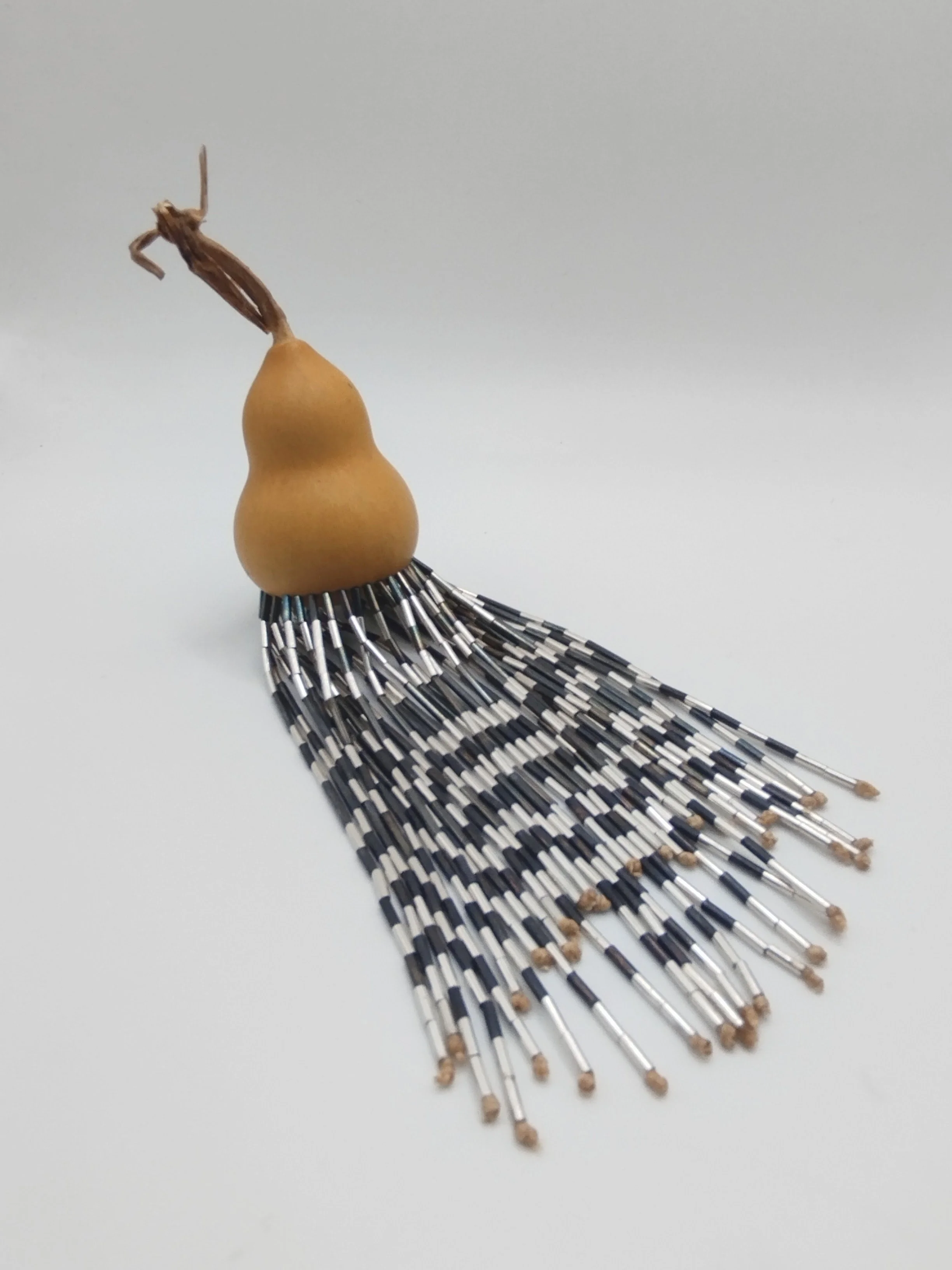
Project 100 is pleased to host Keri-Mei Zagrobelna for her exhibition He Ngaki Māra this May.
Please join us to celebrate the opening night on Thursday 07 May, from 5pm.
He Ngaki Māra speaks to the tending of whenua — of soil, of cultivated kai such as kūmara. When understood through a rongoā lens, this whakaaro extends to the tinana: if we are the māra, what is it we are needing to clear, grow, or nurture within ourselves?
This exhibition positions mahi toi as a form of rongoā, exploring how creative practice can support wellbeing in our everyday lives. Grounded in the rhythms of the Maramataka and the cycles of whenua, the work reflects on balance — when to act, when to rest, when to cultivate, and when to gather. Through contemporary jewellery and adornment, these ideas are carried onto the body, becoming sites of meaning, resilience, and continuity.
Set within a time of harvest, the exhibition reflects on identity, Indigenous reclamation, and Keri-Mei’s whakapapa to Whakatū. It considers the act of tending — not only to land and food, but to relationships, knowledge, and community. Cultivation becomes both literal and metaphorical: a way of understanding nourishment, care, and intentional living within Te Ao Māori.
Though now based in Te Whanganui-a-Tara, Keri-Mei has spent many years living in Whakatū and across Te Waipounamu, and continues to be drawn back there. There is a pull to that whenua that is hard to ignore — something felt as much in the body as it is understood. This work sits within that space of return: of trying to understand where she stands, how she connects, and what it means to claim that connection. It is an ongoing process of figuring out who she is, and where she belongs.
Building on earlier bodies of work including Whakahoki (Courtney Place Lightboxes, 2021) and Pahekoheko (Nelson Provincial Museum, 2025), this exhibition extends Keri-Mei’s research into rongoā, with a particular focus on Rongomātāne, atua of peace and cultivated foods. The work emerges from ongoing kōrero and engagement with mātauranga, including a deep exchange with a taumata held at the Nelson Provincial Museum. In this way, He Ngaki Māra invites reflection on how we might better tend to ourselves and each other through creative practice, cultural knowledge, and connection to whenua.
About the Artist:
Keri-Mei Zagrobelna is a full-time jeweller and multidisciplinary artist based in Te Whanganui-a-Tara Wellington, Aotearoa. Alongside her creative practice, she works as a jewellery tutor and arts mentor, supporting the next generation of makers.
Her work is deeply rooted in a contemporary Māori worldview, with iwi affiliations to Te Āti Awa and Whānau-ā-Apanui, and ancestral connections to Whakatū (the Nelson region) through Te Āti Awa. Drawing on a rich upbringing immersed in museums and the arts, she creates expressive, story-driven pieces that bridge adornment and visual art. While jewellery remains her primary passion, her practice also spans murals, sculpture, carving, photography, and installation.
A graduate of Whitireia with a BaPPa in Visual Arts (2012), she has exhibited and lectured widely throughout Aotearoa and internationally. Through her mahi, she strives to honour her heritage, connect with community, and uplift future Indigenous creatives.
“I use jewellery as my language and speak through my hands. My eyes hear my thoughts and translate.”